Admissions Open 2027
BBA | BCA | B.Tech | LL.B | B.A LL.B | BBA LL.B | LL.M | MBA | MCA
The GNM programme provides a foundation in nursing principles and healthcare practices. Students learn how to support patients, understand common health conditions and contribute to safe and responsible nursing care.
The programme covers important areas such as:
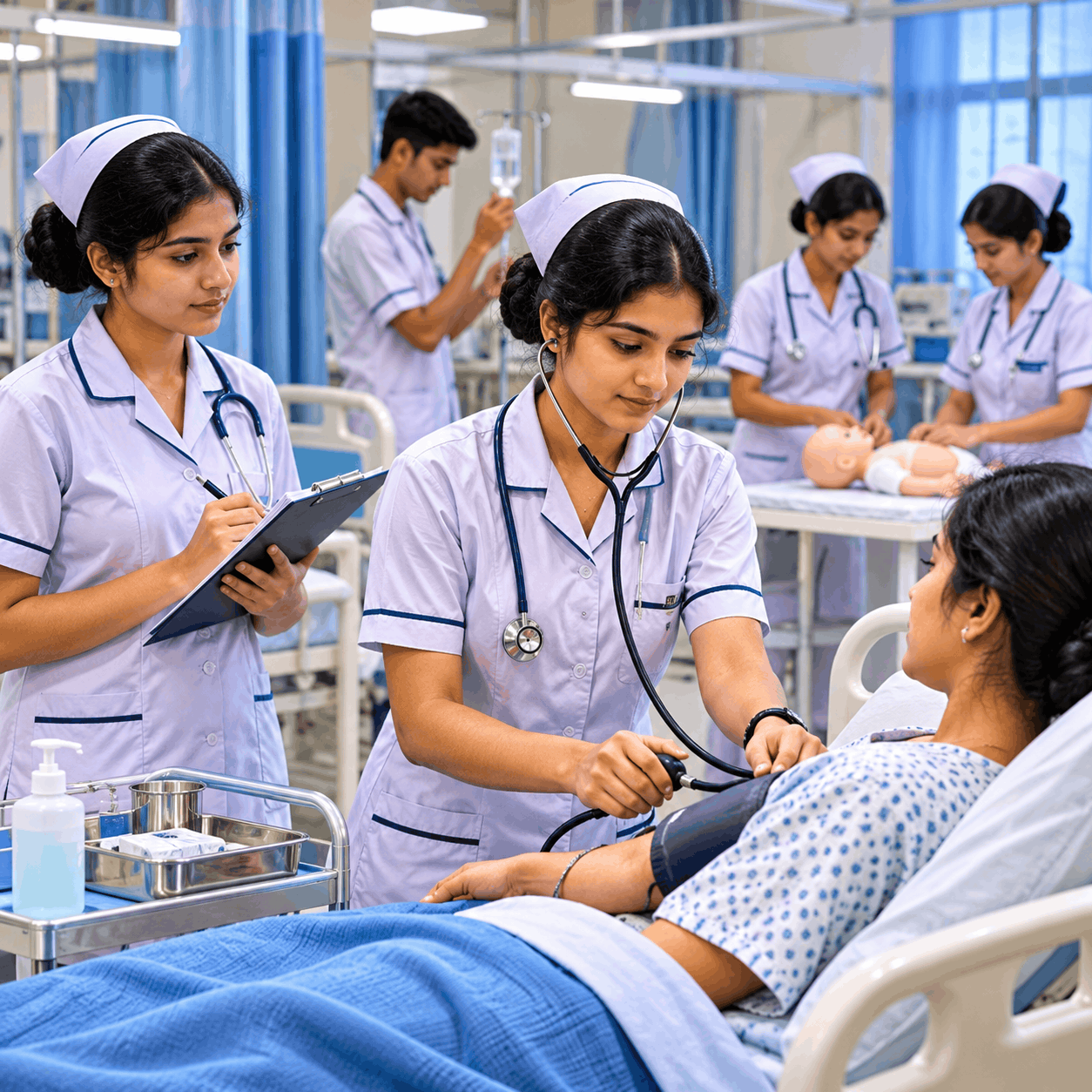
GNM education combines classroom instruction with nursing laboratory practice and clinical learning. Students develop an understanding of patient assessment, basic nursing procedures, health monitoring and healthcare communication.
Practical learning areas may include medical and surgical wards, maternal and newborn care, child health services, mental health nursing, community healthcare and emergency support, subject to the approved training arrangements.
Students interested in pursuing General Nursing and Midwifery at CPJIMT should meet the eligibility requirements prescribed by the Indian Nursing Council and the applicable State Nursing Council.
The general eligibility requirements include:
Age Requirements:
Important: Delhi Nursing Council programme information may specify different admission requirements, including a 50% aggregate criterion. Final eligibility should be confirmed against the latest admission notification and applicable regulatory guidelines before publication or admission.
Choosing a nursing programme is an important step towards building a responsible healthcare career. At CPJIMT, the GNM learning experience can focus on developing nursing knowledge, practical abilities and the professional attitude required in patient-care environments. Students can benefit from an academic approach that emphasises:
An academic environment that encourages active participation and a clear understanding of nursing concepts.
Learning opportunities focused on essential nursing procedures and patient-care practices.
Opportunities to understand healthcare environments through clinical training arrangements.
Learning about preventive care, public health and the healthcare needs of different communities.
Focus on communication, teamwork, discipline and ethical responsibilities.
Support in understanding nursing career pathways and further education options.
After completing GNM and fulfilling the applicable nursing registration requirements, graduates can explore different roles across hospitals, nursing homes, clinics and community healthcare organisations.
| Career Path | Work Area |
|---|---|
| Staff Nurse | Providing patient care in hospitals, nursing homes and healthcare institutions. |
| ICU and Emergency Nurse | Supporting patients in critical care and emergency departments, subject to additional training and employer requirements. |
| Maternal and Child Healthcare Nurse | Assisting with maternity care, newborn support and child healthcare services. |
| Community Health Nurse | Participating in community health programmes and preventive healthcare activities. |
| Nursing Home Nurse | Supporting patients in nursing homes, rehabilitation centres and long-term care facilities. |
| Specialised Clinic Nurse | Assisting healthcare professionals in specialised clinics and treatment centres. |
The GNM curriculum introduces students to the scientific, practical and professional aspects of nursing. The subjects are organised across the programme to build knowledge progressively and prepare students for supervised clinical responsibilities.
| Study Year | Subjects and Learning Areas |
|---|---|
| First Year | Bio Sciences, Behavioural Sciences, Nursing Foundations, Community Health Nursing, Health Education and Communication Skills, Nutrition, Medical-Surgical Nursing I and First Aid. |
| Second Year | Medical-Surgical Nursing II, Mental Health Nursing, Child Health Nursing, Midwifery and Gynaecological Nursing. |
| Third Year | Community Health Nursing II, Midwifery and Gynaecological Nursing, Nursing Education, Nursing Administration, Professional Trends and Adjustment, and Integrated Supervised Internship. |
The final subject distribution and examination structure should follow the current INC-approved syllabus and applicable regulatory requirements.
Nursing education requires a combination of academic understanding, practical ability and professional responsibility. The GNM programme at CPJIMT can be presented around a learning approach that helps students understand these important aspects of healthcare.
The learning journey can emphasise:
Clinical facilities, hospital tie-ups, training arrangements and other institutional provisions should be described according to verified information.
The total fee for the GNM programme may depend on the approved fee structure, academic requirements and applicable institutional policies.
Students and parents are encouraged to contact the admissions team at CPJIMT for updated information about:
GNM-qualified candidates who fulfil the required nursing registration and recruitment conditions can apply for nursing vacancies released by government healthcare institutions.
Potential employment avenues include:
Recruitment eligibility, registration requirements, experience criteria and selection procedures vary by authority and vacancy. Candidates should check the relevant recruitment notification before applying.
GNM graduates can consider further education to improve their nursing knowledge and explore specialised professional roles.
| Higher Education Option | Academic and Career Scope |
|---|---|
| Post Basic B.Sc. Nursing | Provides graduate-level nursing education to eligible registered GNM professionals. |
| B.Sc. Nursing (where eligible) | An alternative route to graduate-level nursing education, subject to the relevant admission rules. |
| M.Sc. Nursing | Advanced nursing education after completing an eligible bachelor’s degree. |
| Post Basic Nursing Diplomas | Opportunities to develop specialised knowledge in selected nursing areas. |
| Nursing Administration Courses | Further learning in nursing leadership, administration and healthcare management. |
| Public Health Courses | Knowledge of community healthcare, health promotion and public health programmes. |
Registered GNM graduates can explore Post Basic B.Sc. Nursing after meeting the prescribed educational and nursing registration requirements. Admission to other nursing programmes depends on the eligibility rules applicable to each course.
Healthcare services continue to require trained professionals who can support patients across hospitals, community settings and specialised treatment facilities. GNM provides a foundation for exploring several nursing and patient-care areas.
Some developing areas include:
GNM stands for General Nursing and Midwifery. It is a professional nursing diploma programme that prepares students with knowledge and practical skills for patient care, community healthcare, maternal health and other nursing services.
Candidates generally need to pass Class 12 from a recognised board with English and meet the prescribed minimum marks and other eligibility conditions set by the Indian Nursing Council and the applicable State Nursing Council.
Yes. Candidates from Arts backgrounds may be eligible for GNM admission if they fulfil the applicable Class 12, English and other admission requirements.
Candidates from non-science streams may also be considered under the applicable eligibility guidelines. They should check the latest admission notification for the exact requirements.
The GNM programme is generally three academic years, including an integrated supervised internship component as prescribed under the applicable curriculum.
Graduates can explore roles in hospitals, nursing homes, maternity centres, specialised clinics, community healthcare programmes and other medical institutions after fulfilling the required registration conditions.
Yes. Eligible and registered GNM graduates can apply for government nursing vacancies when they meet the qualification, registration and other conditions mentioned in the relevant recruitment notification.
Registered GNM graduates can consider Post Basic B.Sc. Nursing after meeting the prescribed eligibility requirements. Other B.Sc. Nursing routes have their own admission conditions.
Yes. They can explore international nursing opportunities after meeting the destination country's requirements for qualification recognition, professional registration, licensing, language proficiency and work experience.
GNM can be a suitable starting point for students interested in patient care and healthcare services. It offers pathways into hospital nursing, community health, maternity care and further nursing education, subject to the applicable professional requirements.
Take the first step towards a professional career in healthcare with the General Nursing and Midwifery programme at CPJIMT. Build your understanding of nursing, patient care and community health while preparing for further learning and professional opportunities.
